Happy snow day everyone.
The weather here is wild. We went from feeling like we weren’t going to have winter to having winter land all in one day.
I wanted to touch on something I’ve seen a bit lately and that’s the issue of credentialing vs the issue of gnosis, vernacular religion, and ways of knowing. To start, a bit of background.
I’ve noticed this from time to time but it really caught my attention around the Winter Solstice when I saw an exchange about the turning of the season, terms someone had used, and how someone was celebrating the festival. It saw again during conversations around Imbolc.
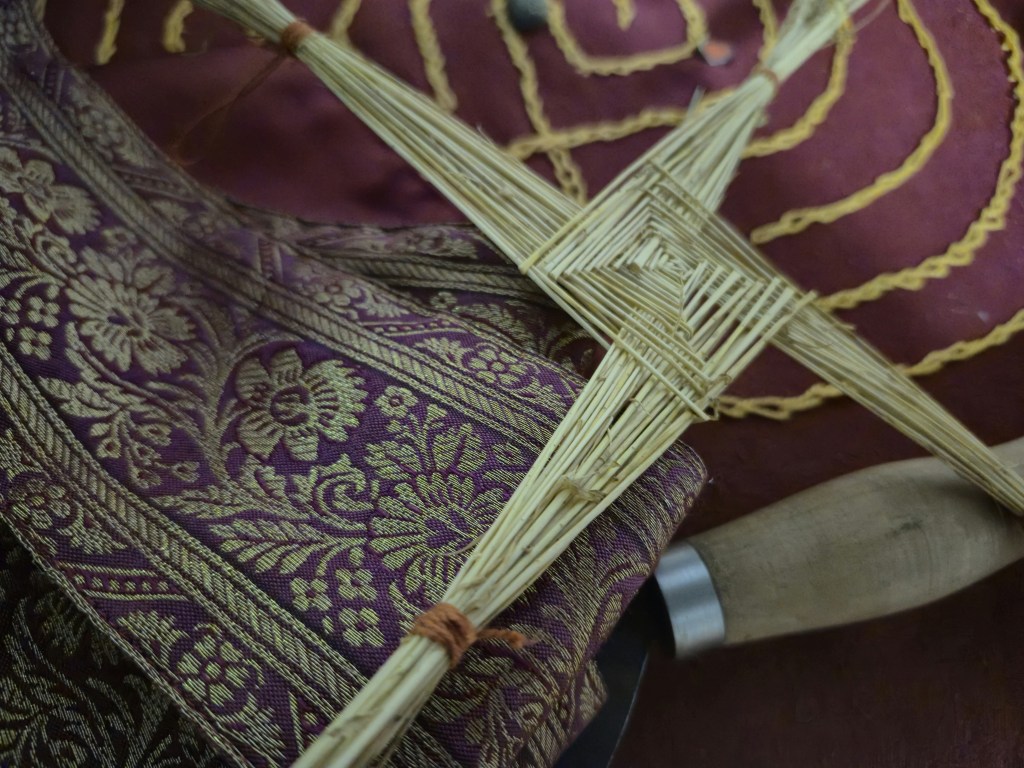
The gist: person says “I celebrate this way and there’s this meaning for me.” Basically they’re saying for them, Imbolc marks the midwinter and they celebrate accordingly.
Enter person 2 with ‘credentials’. “I’m a [insert a bunch of titles, lineage claims, coven/hearth here] and this is *not* a midwinter celebration.” Now I’m not naming anyone because I believe it was truly well intentioned and felt to me like a hang over from patriarchal Christian culture. You know the one, all the dogma, no room for a personal relationship with the Divine (or whatever you call it), where if you don’t follow the rules, you’re doing it wrong.
If you have participated in these kinds of discussions, I’d encourage you to come at it differently, especially if you’re coming in like Person 2. You might want to share your credentials* and lineage if you want, sure. And then you could try something like “so interesting, in my lineage Imbolc is the start of spring. What makes it midwinter for you?”
I mean here, our biggest snowfall this year came yesterday so when I first read someone saying Imbolc was their midwinter, that resonated for me. There’s nothing spring like about it here. And yep, in the Irish tradition, for example, it’s a spring ritual but let’s be real, in North America (especially the northern parts like most of Canada) or the Nordics, Iceland, probably even Northern Scotland, you’re in for more winter after Feb 1, not spring. Feeling the need to stick to the “springness” of the celebration because that’s how it was celebrated at a point in time makes no sense to me when you’re not on the land.
I suppose you can make an argument that celebrating something called Imbolc makes no sense given the association with spring. I’ve leaned into the Candlemas aspect, especially because the idea of sacred candles when it’s still cold and dark is delightful to me. But I think of Brigid+ candles, not Brigid+ lambing because we’re literally two months from the start of lambing (I used to be a shepherd and am acutely aware of this timeline in my region).
The brings me to the next point I wanted to make and I’m just going to touch on this before the day job starts. Rest assured, we’ll revisit this one soon.
The idea of needing a structure and/or intermediary to be in relationship with the Divine has its roots in Christian heteropatriarchy. So anytime someone who is a participant in Pagan or Pagan-adjacent faiths starts in with a rigid structure, I have questions. Now I suspect some of this has to do with the roots of Wicca (more on that later too). It also has to do with pushback about the legitimacy of the practices, I’m sure. Having a structure helps create cohesion and recognisability which does help with legitimacy. It’s not all for optics though. It’s easier to have practices when you have Practices. And, having a structure to the year, rituals, and practices can absolutely be wonderful for practitioners, no question. There’s nothing wrong with it – it can even be soothing to the nervous system. All of that said, when you cling to it dogmatically, you aren’t really doing anything outside of the more conventional, mainstream faith practices right? Sure, your practices look a little different but they also look different between Christianity and Buddhism.
Try feeling your practices, no matter your tradition. Try feeling what fits for the land and your actual life. And for the love of everything… if you’re branching away from the more common, established faiths/faith practices please start being curious about the experiences of others, and all others, not just others in your group. Ask questions. Engage. Most importantly, do the same for your own practices. Engage with them deeply. Ask questions. Figure out why you practice how you do. And why. Most of all, enjoy it all. Take care of yourself and others.
More on faith and practices coming soon!
Colleen

*For credentials, I think you already know this but I have a doctorate from a totally boring, conventional institution in this stuff. And I teach it at a theological college.
 the Witchery Society